Cable Management Safety: Importance of Proper Support Brackets
Cable tray support brackets are often overlooked in robotic cell design, even though they impact uptime. Get selection tips, professional insight, and more.
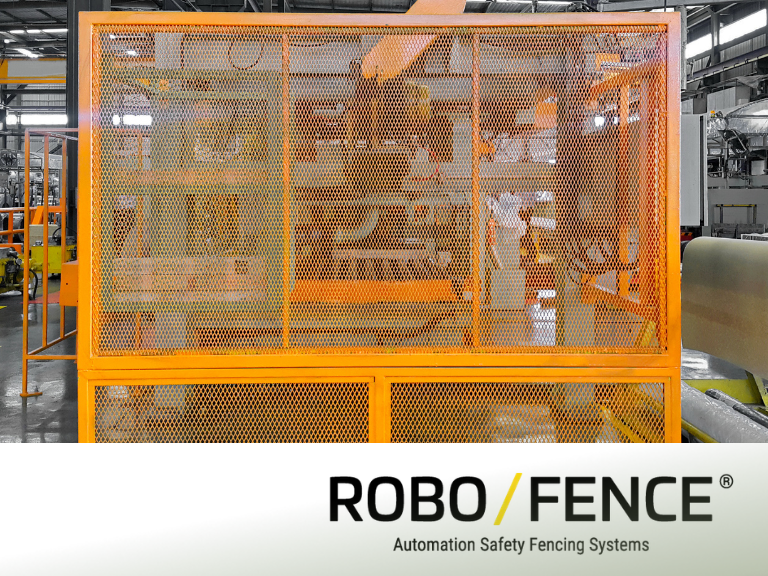
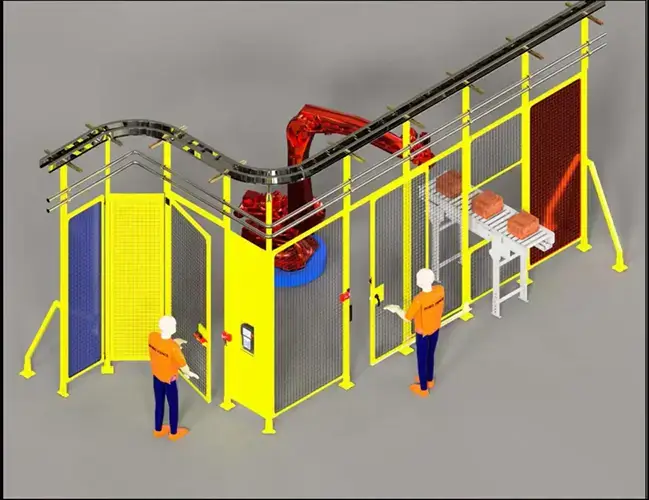
Robotic and machinery guarding, if not designed around your facility, can cause bottlenecks within and around the cell and potentially result in safety risks for your workers.
That’s not to say that off-the-shelf, standard commercial solutions don’t work. They can be the right choice for common hazards, such as point-of-operation guarding for a press brake, or when a quick installation is necessary. However, some facilities, especially those with robotic cells, need custom solutions to address combined hazards that many off-the-shelf products aren’t designed to do.
The width, height, construction material, and overall design of machine guards can be customized to accommodate multiple access points, integrate with existing material handling equipment or tooling, support legacy equipment, and maintain longevity in extremely harsh environments.
If you’re considering custom guarding for your facility, think about:
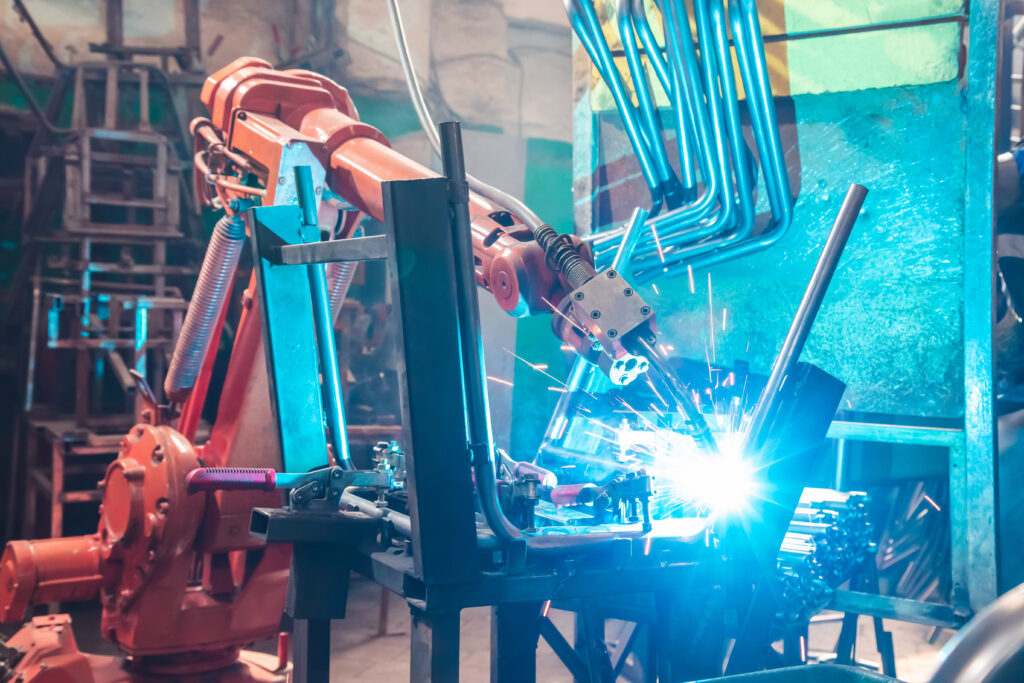
Equipment like robots, cranes, and gantries is especially hazardous because they can move without warning and strike someone standing too close. There’s also the risk of objects being dropped or flying free. Other types of equipment, like conveyors, have pinch points around rollers that can cause injury, and manufacturing processes including welding, grinding, flash removal, and painting have to be guarded to reduce injuries.
So, the first step in your custom design is to think about what hazards are present in your specific application. You can read more about how to do this in our Risk Assessment guide.
In most cases, operators and other employees need to see into a cell without actually stepping inside, whether to monitor processes for correct operation, quickly identify problems, or check productivity, and this is where panel selection matters.
Wire mesh, clear polycarbonate, and solid steel are the three primary panel designs.
Wire mesh is the typical solution when visibility is needed. However, this option won’t protect against flying debris. Clear polycarbonate panels are preferred in applications where airborne debris needs to be blocked, or noise levels must be managed.
There are at least two common situations where solid panels are preferred. One is to screen against bright and/or hazardous lights, such as welding arcs, UV lights, and intense LEDs used for machine vision systems. The other is to stop visitors from viewing proprietary processes or equipment.

The working environment dictates what materials should be used for guarding. Guarding could be exposed to water and corrosive chemicals during washdown procedures, or subjected to acids or alkalis that could damage coatings, panels, and posts.
Dirt and dust can also cause problems for hinges, interlocks, and the wheels used on access gates. Regular cleaning is important, but by considering these factors during the design phase, it may be possible to select more robust components for particularly problematic areas.
The risk of impacts to guarding should also be considered. Forklift collisions do occur, and there can also be potentially dangerous energy releases inside the cell, such as a wet part flying free from a fast-moving gripper.
Gates and doors are an important factor in cell productivity. Off-the-shelf guarding typically uses full-access personnel gates where a single entrance provides complete access to the whole cell. Opening the gate immediately stops production.
This approach can be very costly when frequent access is needed, such as with printing machines or label dispensers. An alternative that custom guarding can address is to provide localized access just to specific pieces of equipment, often from the rear.
Other aspects of cell access to consider are the need for maintenance and tool changeovers, which might require forklift access. In some situations, maintenance technicians, engineers, or other workers may need to be in the cell with the robot while it is running. In these cases, pressure mats and light curtains can be effective ways of enhancing safety.
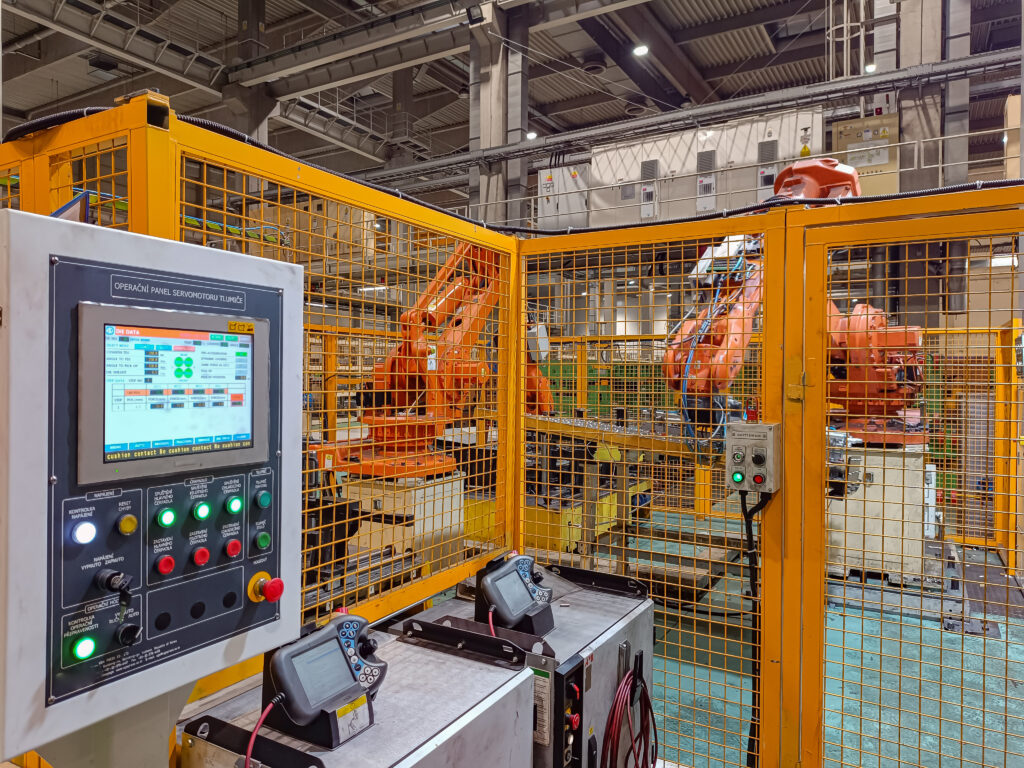
Safety guarding must be sized appropriately, meaning it’s tall and wide enough to protect workers from potential hazards but also far enough from the hazards to prevent premature failure.
Panel height may seem simple, but the entire application and the environment must be thoroughly considered. For example, 6 feet of panel could seem enough for a robotic cell, but that may not be tall enough if the robot is mounted overhead, installed on a pedestal, or if there’s a ramp or climbable surface nearby. And, if a mezzanine or other raised area passes over the cell, horizontal panels may even be needed to prevent anything dropping into the cell.
The bottom line is that off-the-shelf guarding is rarely engineered to provide the optimal level of protection, especially for robotic applications.
If mesh panels are used for guarding, people will almost certainly reach through. To address this, standards like ISO 13855 and 13857 have guidance on distances, stopping speeds, and mesh sizes.
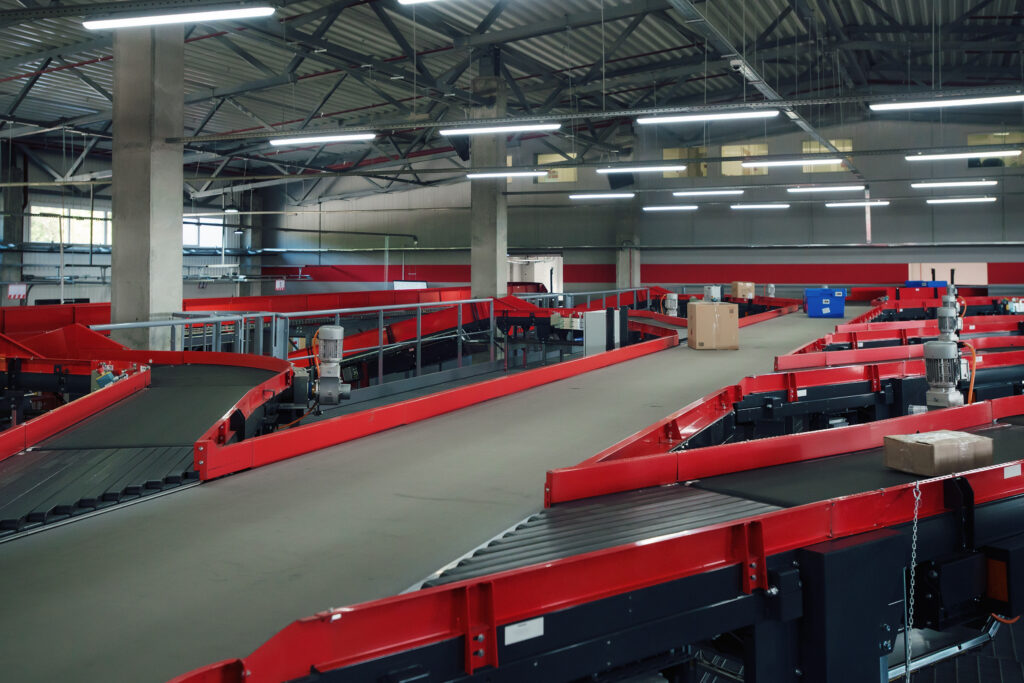
Guarding creates a physical barrier that separates workers from dangerous machinery. It’s not the only way to provide safety, though. Many cells use light curtains, laser scanners, and safety mats to keep people safe while they work with machinery.
When designing machine guards, new systems must integrate smoothly with the safety components already in place and link up with the cell safety controller to provide the rapid responses needed.
While this can be possible to achieve with off-the-shelf guarding, custom solutions are designed to integrate with the equipment and devices you already use.
ROBO FENCE® designs custom guarding solutions for industrial facilities around the world. Every solution we develop is based on your unique needs and designed for seamless integration into your existing environment. All fencing is manufactured in the United States by our partner, Square Group.
Visit our website to learn more about our capabilities and solutions, or contact us today to schedule a design consultation.
Contact one of our experts to get started on your next machine guarding project. Until then, browse our complete catalog to see our offerings.
Square Group LLC
Proud Manufacturers and Suppliers of ROBO FENCE®