Cable Management Safety: Importance of Proper Support Brackets
Cable tray support brackets are often overlooked in robotic cell design, even though they impact uptime. Get selection tips, professional insight, and more.
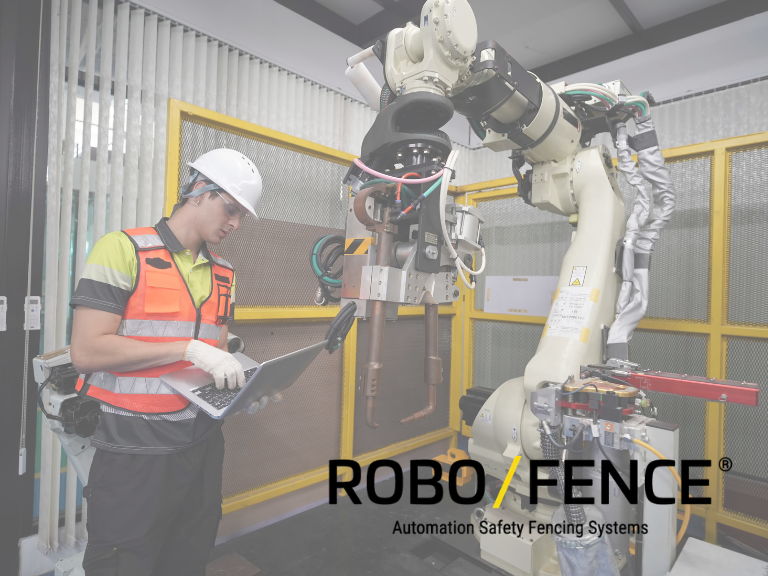
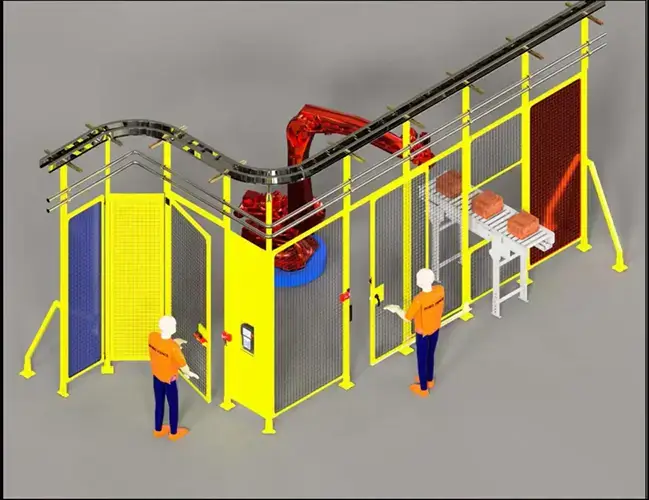
Robot safety fencing exists to keep people out of this space, prevent objects from flying out of the robot cell, and, in some cases, to help block intense welding arcs and spatter. Robotic fencing must be designed based on the unique hazards found in the workplace’s risk assessment. Sizing, including height and width, is just one design-based factor manufacturers have to consider. The sizing will vary based on the environment, but there are safety regulations that fencing must comply with.
Multiple regulations cover robot safety and the use of robot safety fencing. Those with a particular emphasis on fence height and mesh size are:
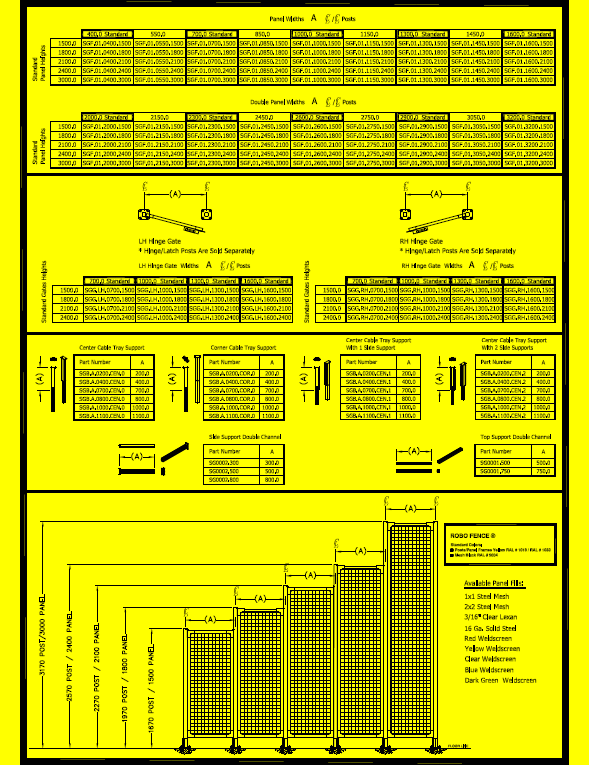
Beyond safety regulations, these are the questions you should be asking when designing your fencing:
Start here when selecting the size of your robotic fencing. The maximum reach is the greatest distance the robot arm can extend from its mounting location and must include any tooling mounted at the end of the arm. It is not sufficient to rely solely on manufacturer data on robot capabilities.
Fencing around a robot must be tall enough that no one can reach into the work envelope. For most applications, the default is around 2,000 mm (79”), but taller fencing may be required in certain situations, including:
If a gate is opened or a light curtain is activated, a safety-rated controller signals the robot to stop moving. It takes a finite amount of time for the signal to reach the robot controller, and then once power is cut, momentum can allow for some additional movement.
Given that the robot can travel at 2 m/s or more, the EOAT will continue moving for some distance before coming to rest, and this must be taken into account when designing a fencing system for a robotic cell.
Some operations, such as grinding and welding, can create flying debris, and others have the risk of the robotic gripper unexpectedly releasing an object. In both cases, the fencing must be a) high enough to prevent debris from flying over the fencing, and b) solid to prevent materials from passing through the fencing panels.
Many robotic cells use conveyors to deliver and remove products, and these often pass through or under the fence panels. Simply mounting panels high enough for conveyors to run underneath is not acceptable. ISO 10218-2, for instance, covers lower limb access restrictions.
Where a panel is raised locally or an opening is created for a conveyor, the entry point must be guarded to prevent human intrusion into the work envelope.
If a cell is served by an overhead crane, the fence height must allow access while still providing protection. Consideration should also be given to the risk that the load may not be raised high enough to clear the panels. Cutouts protected by light curtains could be a solution.
The latest generation of robot safety standards details situations that require monitoring of human workers inside the cell. Mesh fence panels provide good visibility, but it may also be useful to incorporate cameras to provide a better view.
Where fence panels are opaque, other monitoring systems, such as cameras, must be installed.
HMI position determines where operators, maintenance technicians, and engineers will stand while working on the robotic system. They will need good visibility of the robot, but should not be put in a position that encourages reaching through or leaning over the fence.
Another way of looking at this is that fence dimensions at the HMI location must be such that it’s not possible to enter or reach into the hazardous area.
A risk assessment is a structured approach to identifying the potential hazards around a robot cell and developing mitigating actions. Carrying out a risk assessment before designing robot guarding will ensure the final system protects against all anticipated risks.
Assessments should also be performed when processes or heavy machinery are changed, as this introduces new risks.
Once a risk assessment has been performed, ROBO FENCE® can help you design effective safety fencing and provide guidance on appropriate guarding systems based on industry regulations and the unique hazards associated with your plant or facility.
All robotic safety systems are manufactured in-house by our partner, Square Group, LLC, and engineered to meet the specific needs of your application and to integrate seamlessly into your environment. Contact us today to request a project consultation.
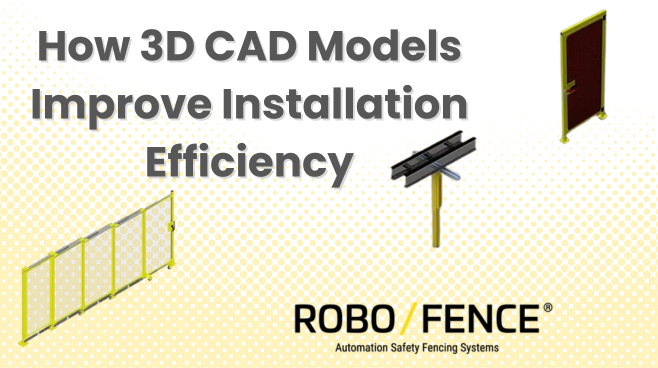
Contact one of our experts to get started on your next machine guarding project. Until then, browse our complete catalog to see our offerings.
Square Group LLC
Proud Manufacturers and Suppliers of ROBO FENCE®