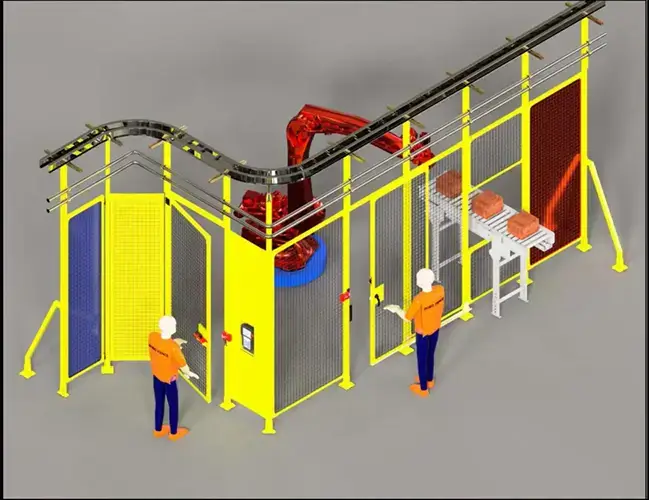
Cable Management Safety: Importance of Proper Support Brackets
Cable tray support brackets are often overlooked in robotic cell design, even though they impact uptime. Get selection tips, professional insight, and more.
The idea behind collaborative robots (cobots) was to create machines that wouldn’t injure any humans in their work envelope, thus increasing productivity and reducing the amount of complex guarding needed.
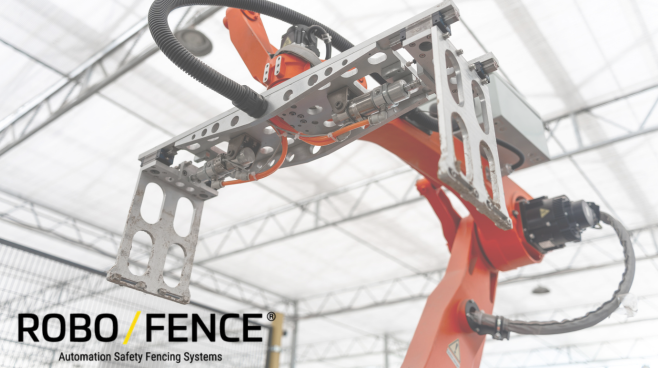
Since cobots were developed, the consensus is that they are safer, but they still pose threats to human workers. These threats stem from the end-of-arm tooling, the type of work being done, and other equipment in the cell. Parts can fly free, cutters and grinders can throw off debris, and sound levels can be too high. Tools can also create crush or entanglement hazards, even when the robot itself is safe.
The latest revisions to robot safety standards take these risks into account. Safety requirements now address collaborative applications and are essentially the same as traditional robot safety requirements. Accordingly, when designing automation using either type of robot, a risk assessment is always the mandatory first step.
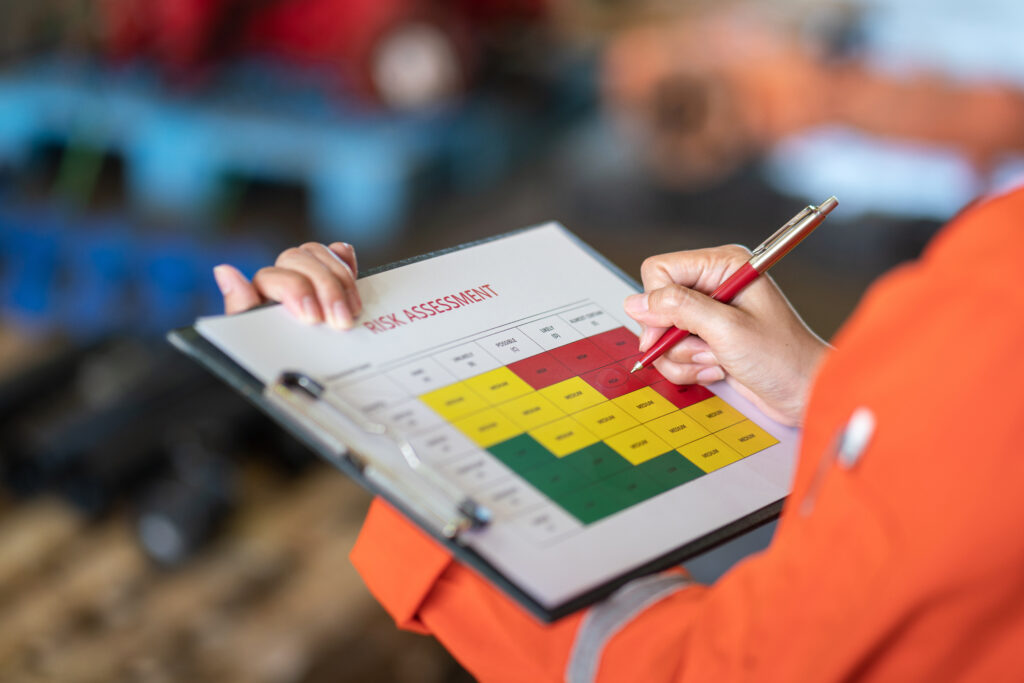
The primary safety standard in industrial robotics is ISO 10218 (ANSI/A3 R15.06-2025 in the U.S.) Part 2 of the ISO standard, which covers system integration, requires a risk assessment for every project. It also says this should be carried out as defined in ISO 12100 (the general machinery risk assessment methodology).
There’s no difference in how a risk assessment is performed for cobot versus traditional robotic applications. Each should involve the following steps:
Control system safety is addressed through the reliability of safety components, including sensors and switches, as well as the control system architecture. Under ISO 13849, component reliability is covered by “Performance Level” (PL), and architecture is defined by categories.
For the traditional robot cell, PL d and Category 3 safety levels are typically required. PL d puts the probability of dangerous failure per hour at 0.00001% to 0.0001%. Category 3 means that any single fault should be detected before the safety system is needed, and should not affect cell safety.
In a cobot application, these measures can be challenging to define and meet. PL relates to how the cobot protects against causing human injury and must be evaluated accordingly.
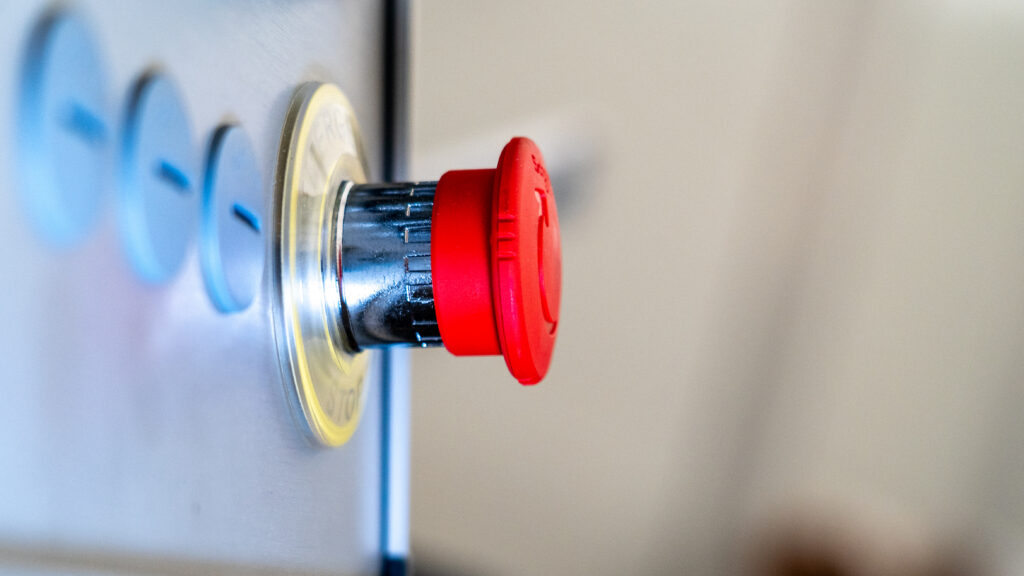
Although E-stops can sometimes control a cell, they are intended only for use when a problem occurs. They let operators bring a cell to an immediate halt to prevent equipment damage or injury to anyone working nearby.
Both collaborative and non-collaborative robot applications can experience situations where an immediate shutdown is needed. In such cases, the E-stop must shut down the entire cell operation, including conveyors and other machines.
Any perception that Lockout/Tagout (LOTO) is less important in cobot than traditional robotic applications is incorrect. Without LOTO, there’s a possibility of clamps, grippers, conveyors, and tools being activated while someone is inside the cell, such as for routine maintenance. A cobot has safety systems that should prevent it from injuring a nearby human, but these do not affect the rest of the cell.
Teach and manual mode controls let you fine-tune part programs and verify program operation. Teach is almost always performed with the technician inside the robot’s working envelope, and the same is often true when in manual mode.
With a traditional robot, Teach runs step by step at low speed. Manual mode allows the robot to combine steps and run at an operator-managed speed. The risks inherent in these operations must be considered during cell design.
Cobot applications also often use these control modes, and again, they should be considered during the risk assessment. However, there is a danger of confusing hand-guiding cobot operation with Teach and Manual. Hand guiding is different and should not be used while teaching the robot.
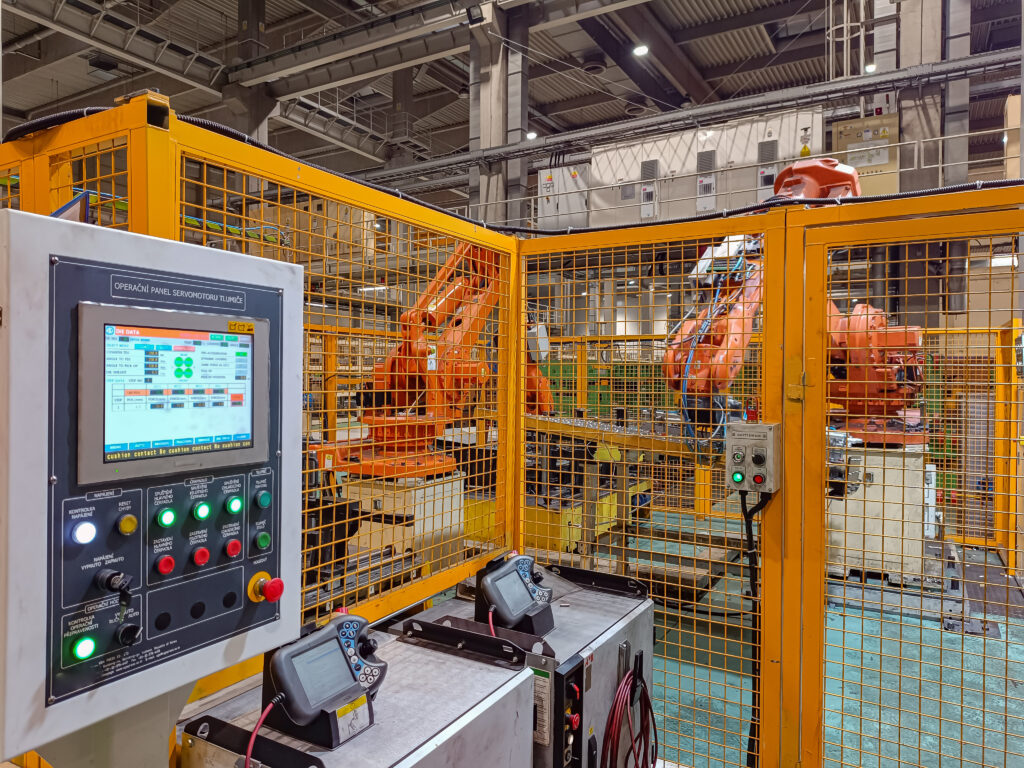
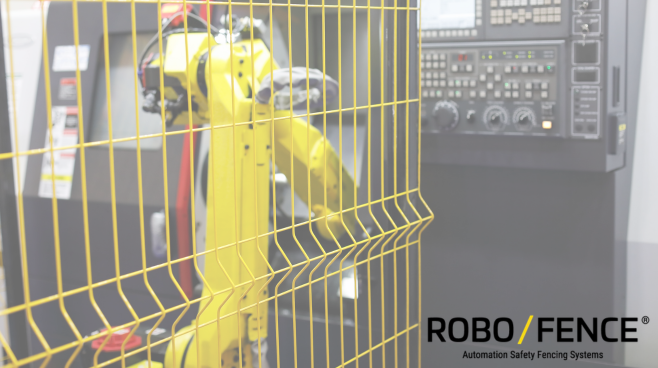
Traditional robots generally require fixed guards, interlocked access doors, and devices like safety scanners or pressure mats to provide separation. Because cobots are designed to work close to humans, many people assume guards are unnecessary. In practice, though, the cobot’s end-of-arm tooling and the task it performs can create hazards. These include pinch points, entanglement risks, and flying debris. The consequences of an object being incorrectly gripped must also be considered, as well as noise levels, liquid sprays, fumes, and dust.
The extent to which guards are needed for cobot applications will depend on the outcome of the risk assessment.
Every workplace has hazards, but robots present particular challenges. The issue is that it’s not obvious where a robot arm will move, creating many potential trap points. In traditional robotic applications, physical separation and access control are the primary safeguarding approaches. This means guarding, gate interlocks, light curtains, pressure mats, and maintaining acceptable distances, as defined in ISO 13855 and 13857.
Cobots take a different approach. As detailed in ISO/TS 15066, protection entails one or more of the following:
This eliminates the hazards of fast-moving robotic arms, but some risks may remain, including pinch points and dangerous end effectors or workpieces, so a risk assessment is needed.
Collaborative application guarding may differ from guarding around a traditional robot, which is why a risk assessment is such an important first step. It will reveal why guarding is needed, where it’s needed, and how it should be implemented.
ROBO FENCE® can help you maximize worker safety, improve productivity, and meet standard industry requirements through custom-engineered guarding. If you’ve already completed your risk assessment and need design assistance, please contact us today to get started.
Contact one of our experts to get started on your next machine guarding project. Until then, browse our complete catalog to see our offerings.

Square Group LLC
Proud Manufacturers and Suppliers of ROBO FENCE®