Installing Guarding Systems Around Conveyor Belts: Best Practices
Safety guarding helps protect workers from pinch points and other conveyor system hazards. Learn more about best design practices for conveyor guards.
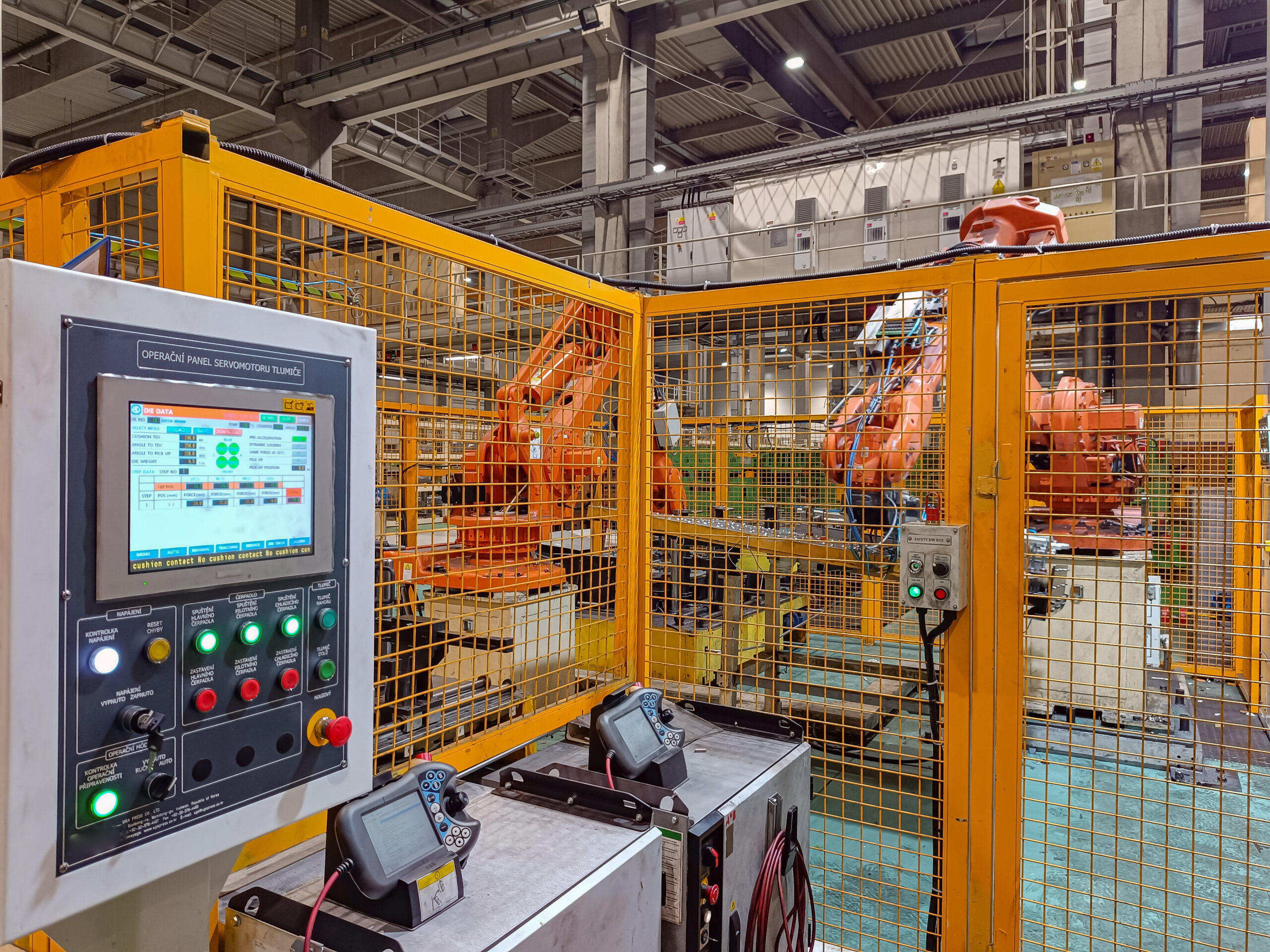
Industrial robots can improve process efficiency and quality, but they can also be dangerous. Unlike other automated equipment, it’s never clear when or where a robot arm will pivot or swing. This means, to avoid crush injuries, workers must always be kept clear of the work envelope. Another hazard is the risk that the gripper or end-of-arm tooling will drop something while moving quickly, potentially injuring anyone in its path.
To prevent these types of injuries, ANSI/A3 developed the R15.06-2025 standard, which requires manufacturers (using robots) to implement appropriate safety measures for their employees. This is done either by installing physical fences around robotic cells or using light curtains that automatically shut down the cell if a risk is detected.
This article explores the differences between these two robotic guarding options.
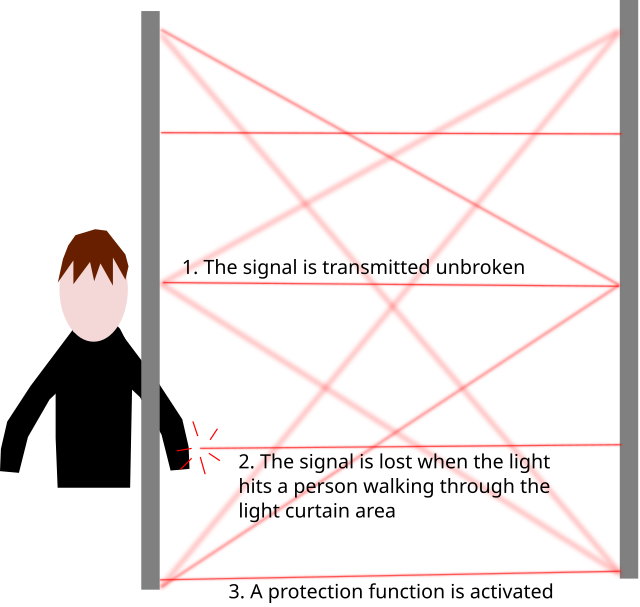
As the name suggests, light curtains produce a beam of light from a transmitter to a receiver. The beams are infrared, making them invisible to the human eye. Any interruption in the beams is detected and can initiate an emergency stop.
The transmitter and receiver look like two “sticks” and can be as tall or short as needed. Beam spacing and the maximum and minimum distances between sticks are determined by the stick design. When choosing light curtains, it’s important to consider these factors for maximum safety.
The gap between beams determines the smallest object that can pass through. This also determines how far away from the robot the curtain must be. Finger protection requires a narrower gap than hands. Curtains set to trigger only on objects the size of a hand must be further away from the hazard.
Modern light curtains incorporate blanking and muting features to allow beam breakage without triggering a shutdown. Blanking involves telling the curtain controller to disregard the temporary obstruction of one or more beams. Muting refers to temporarily stopping detection, as needed to let a container pass into or out of a cell on a conveyor.
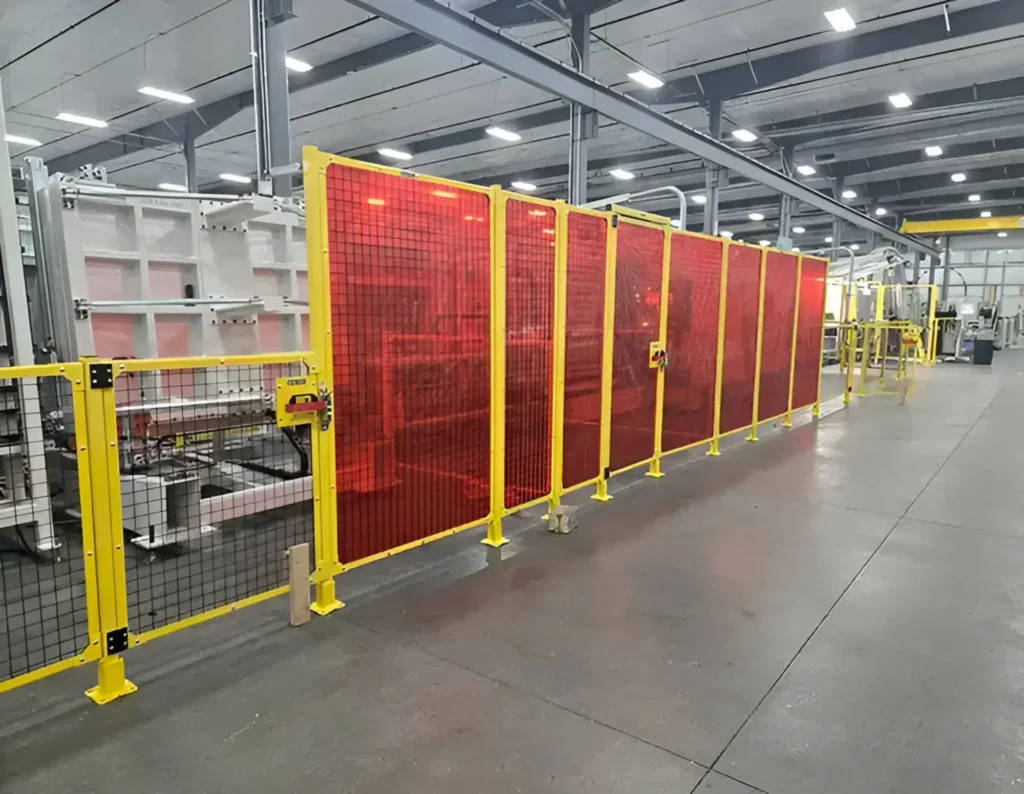
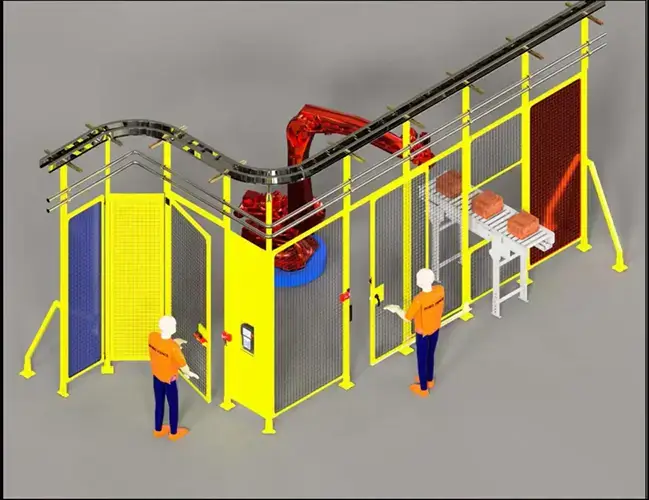
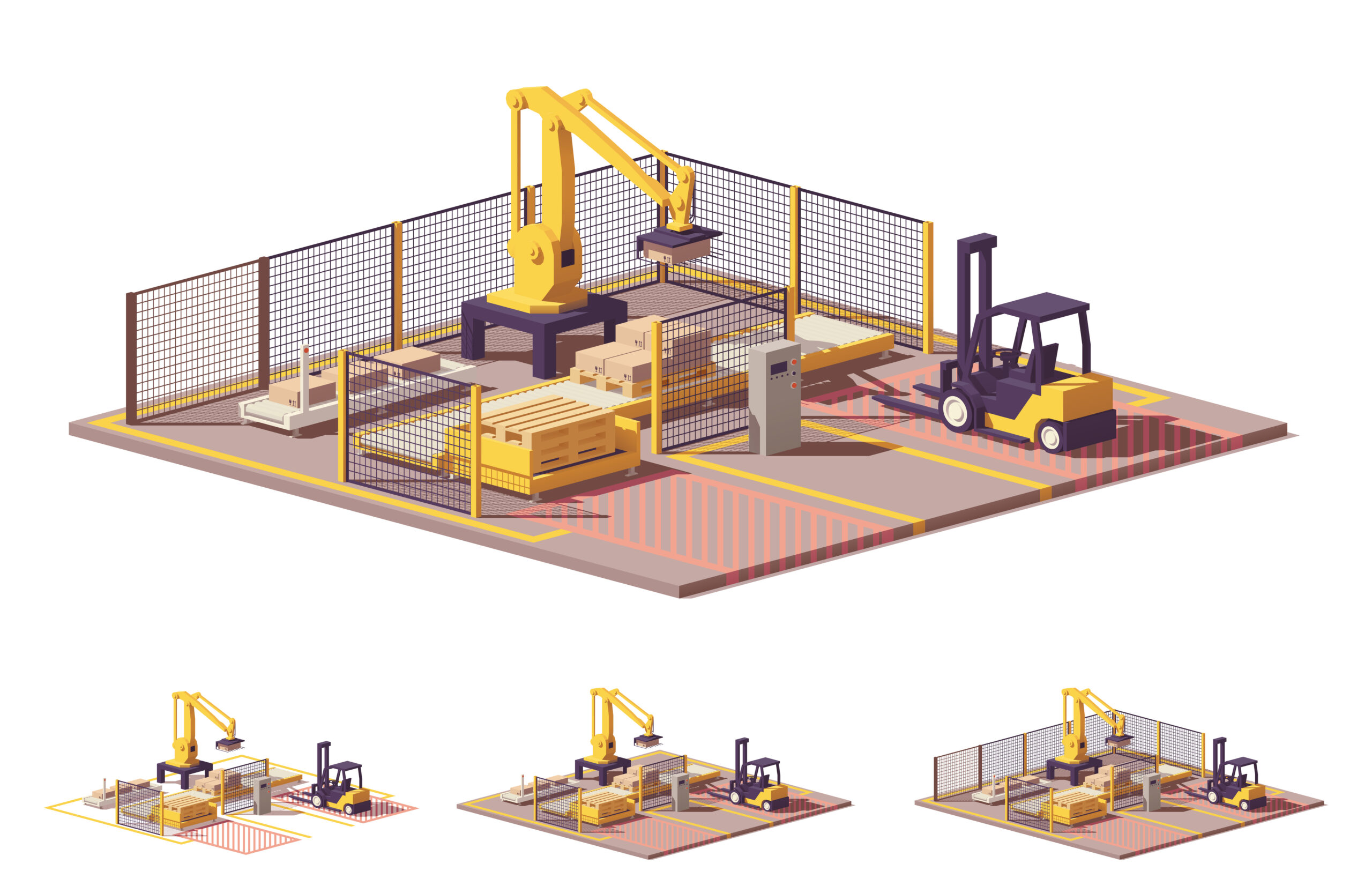
Safety fencing provides a physical barrier that prevents people and other objects, such as forklifts or flying debris, from passing through. Fencing for robot cells and other industrial equipment is usually constructed with a metal frame with an inner filler. This inner filler is usually wire mesh, but it can also be a clear or opaque solid material, provided it has the strength to resist impacts. Fence panels are fixed securely to upright posts mounted to the floor.
Opening panels (gates) are interlocked with the cell safety system. If the gate is opened, the robot or other equipment stops immediately. Operating switches can be locked and integrated into Lockout/Tagout (LOTO) systems.
For access into a cell, fence panels can be hinged or sliding. Hinged panels need mounting on a sturdy vertical post and a floor area to move on. Sliding fence panels move in a floor-mounted track and take up less space.
Every robot cell should be suitably guarded to protect workers from injury. A formal risk assessment should be conducted beforehand to determine existing hazards and identify the most appropriate corrective actions.
When considering your guarding options, it’s important to remember that fencing provides a physical barrier. There may be situations where light curtains are effective in some, possibly all, parts of a robot cell, but they do have significant limitations.
If you’re designing guarding for a new or existing cell, ROBO FENCE® is here to help. Our experts can provide both product recommendations and design assistance based on your facility’s unique risks. Visit our website to learn more about our guarding solutions, or contact us today to get started with a design consultation.
Contact one of our experts to get started on your next machine guarding project. Until then, browse our complete catalog to see our offerings.

Square Group LLC
Proud Manufacturers and Suppliers of ROBO FENCE®