Robotic Guarding: Safety Mats Versus Safety Fencing
Safety mats and fencing both provide protection, but there are situations where one may be preferred over the other. Learn more.
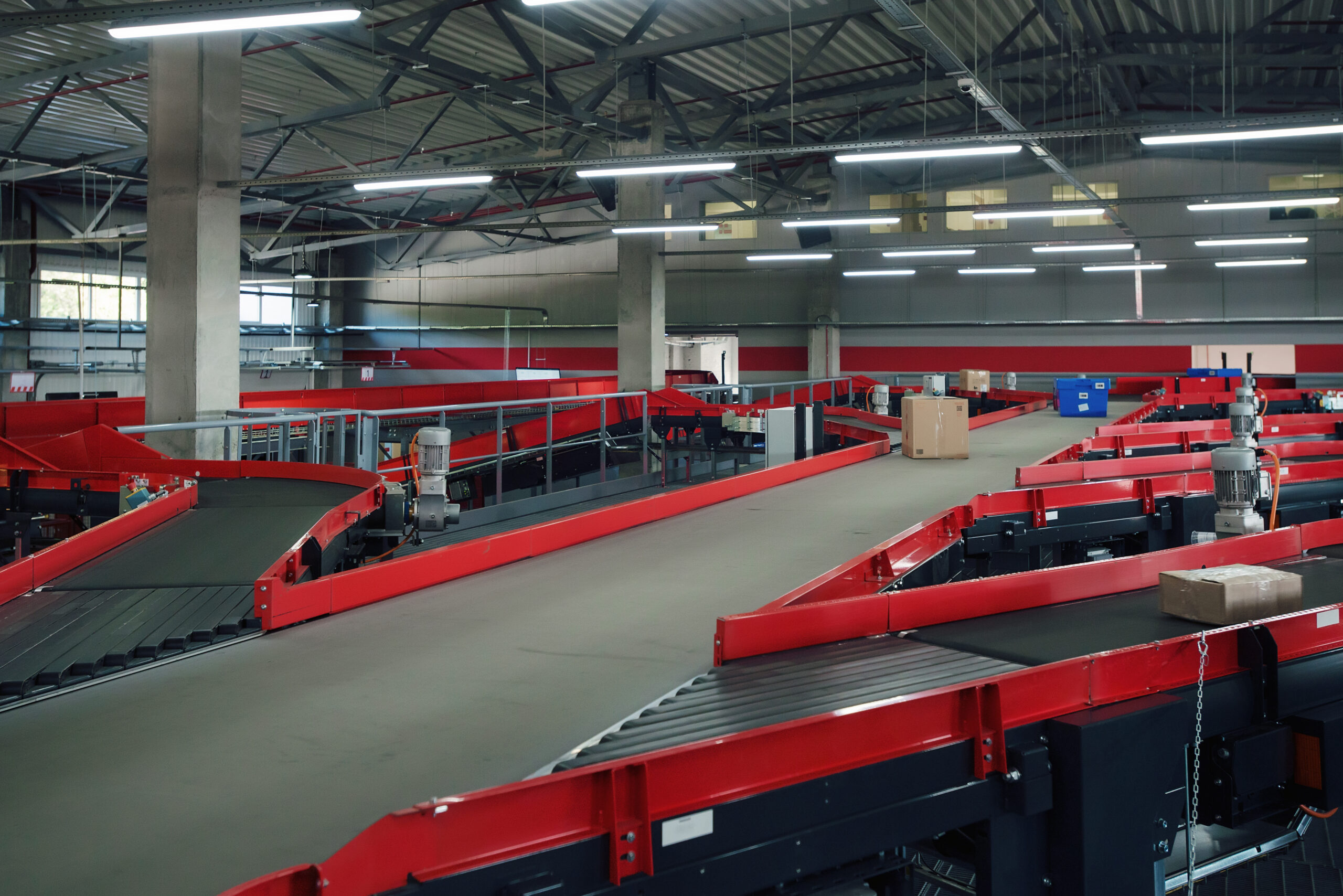
Industrial conveyor belts are hazardous pieces of equipment. In fact, OSHA records show hundreds of conveyor-related accidents each year, a few of which resulted in fatalities. Ensuring safety around conveyor systems starts with installing the appropriate guarding. Guarding, including fencing and light curtains, drastically reduces exposure to common hazards associated with conveyor systems.
Conveyors range from short flat belts to long mesh systems, roller conveyors, and pallet and skillet conveyors. Some handle bulk materials, some are intended for packages, and others move single units. While there are many technical differences, the hazard issues are similar, specifically:
Some of these can be addressed by local guards, such as flat plates, but perimeter guarding provides a higher level of protection along the entire belt length.
You can’t design appropriate guarding for your conveyor system without first performing a risk assessment. These proactive assessments should occur before the equipment is first installed and during redesign or process optimization projects.
Risk assessments involve identifying every location where an accident could conceivably happen, not just during normal operation, but at start-up and shut down, and during cleaning and maintenance. Guides, such as the OSHA Job Hazard Analysis (JHA), are available to help improve the effectiveness of these assessments.
Having identified potential hazards, the next step is to determine the methods required to mitigate or eliminate these risks, which will typically include some type of guarding, whether localized, perimeter, or presence detection. Please note that when designing guarding around conveyor belts, you must comply with OSHA 20 CFR 1910.219, CRF 1926.555, as well as ANSI B20.1, and ISO 13849 for control systems.
Pinch and nip points can often be protected by installing flat plates or covers directly at the location. However, in a complex system with multiple entry and exit points, it can take a lot of work to cover every hazard. Plus, these guards may need to be removed periodically for cleaning and/or maintenance; unless they are interlocked to the belt controller, there is a risk of activation while work is underway.
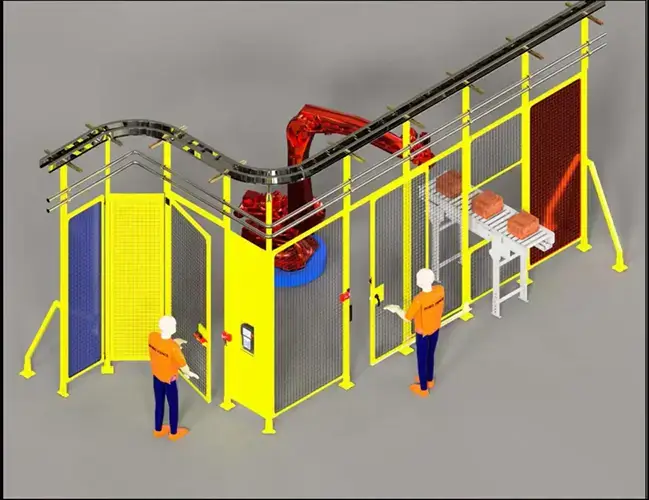
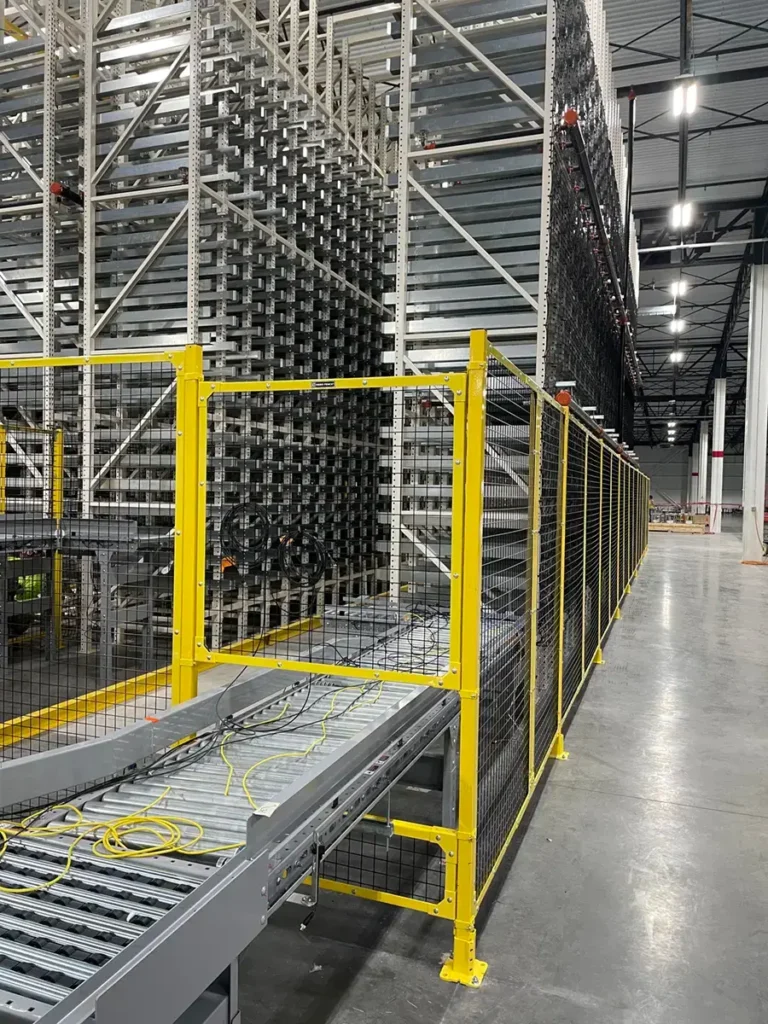
As the name suggests, perimeter guarding involves installing a physical barrier around the entire system. This type of guarding incorporates gates and other access points as needed, ensuring that every part of the conveyor is protected and can be readily interfaced with the belt controller.
Mesh panels are often selected for perimeter guarding as they allow good visibility and airflow. Solid panels can be clear or opaque.
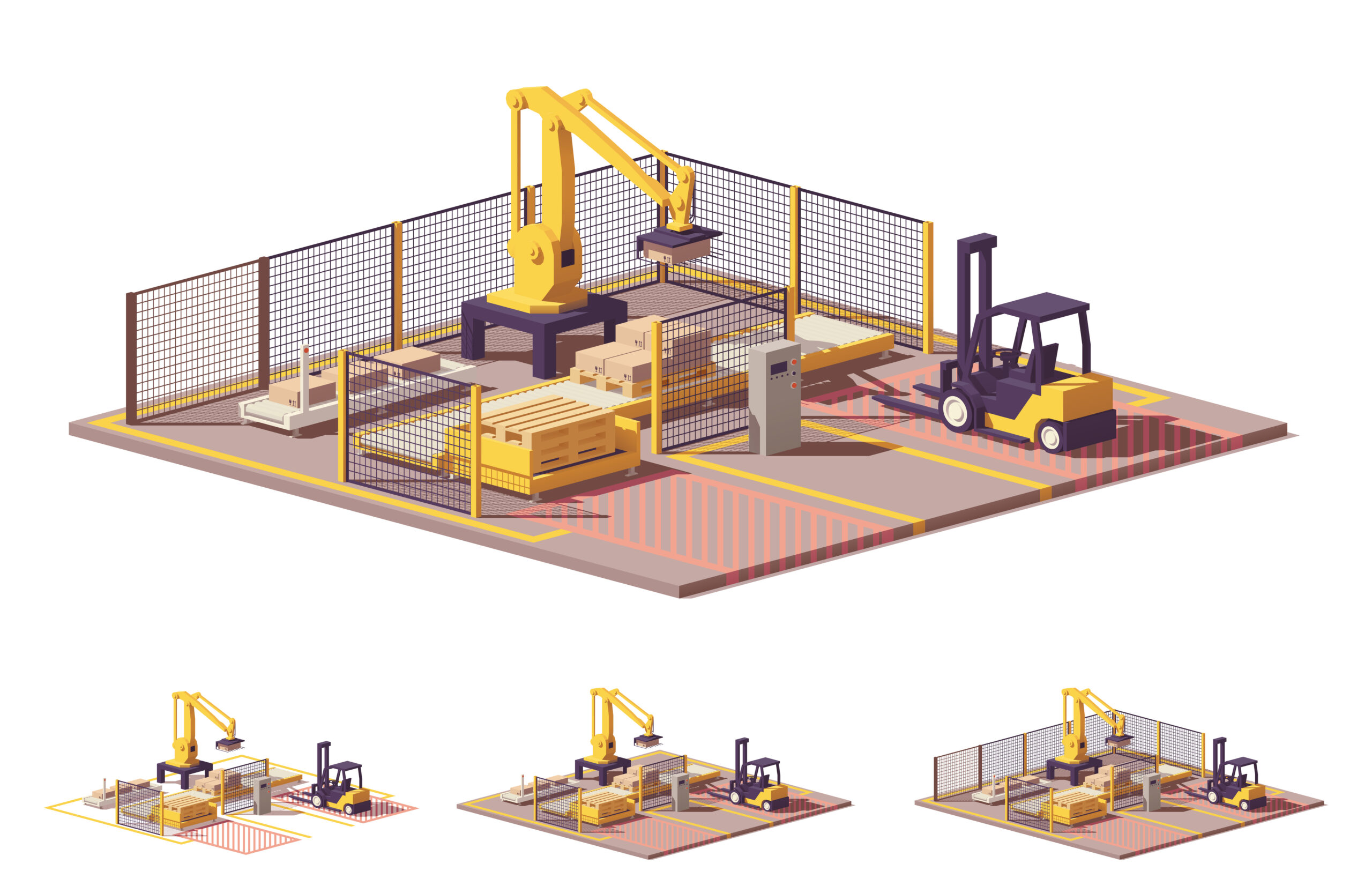
Presence detection guarding refers to light curtains and pressure mats that are strategically placed around hazardous areas of the belt. Load and unload points are sometimes protected this way. This type of guarding is sometimes used with physical perimeter guarding.
A potential issue with using mesh panels for conveyor belt guarding is the size of the panel openings. Larger openings allow objects to pass through, which means the panels must be set further back from the belt.
Two standards to use regarding mesh size and placement are ANSI B11.19 and ISO 14120. The ANSI standard provides extensive information on all aspects of guarding. ISO 14120 is similar and may be referenced on guards and conveyors sourced from outside the United States.
ISO 13857 references a “finger probe” that is passed through the mesh to assess opening size and distance. These finger probe sets are available online and enable rapid testing of mesh guards.
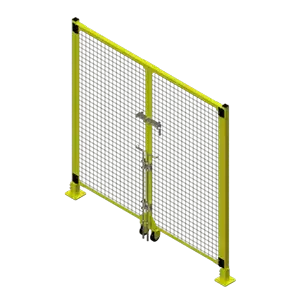
Access is an important consideration during conveyor belt guarding design. Workers may need to reach parts of a belt to fix jams, and periodic access may be required for maintenance.
Hinged gates are a cost-effective way of allowing entry to the belt as needed. One factor to remember is that there must be space for the gate to open into. In some cases, sliding gates can be used.
When installed, gates should use switches that integrate with the belt controller. This ensures the belt stops quickly when the gate is opened. These interlocked switches can also be an effective Lockout/Tagout procedure when equipped with locks to prevent unauthorized use.
E-stops should also be installed along any conveyor system so that it can be stopped quickly if a problem occurs. Push buttons, pull cords, and stop bars are all suitable methods.
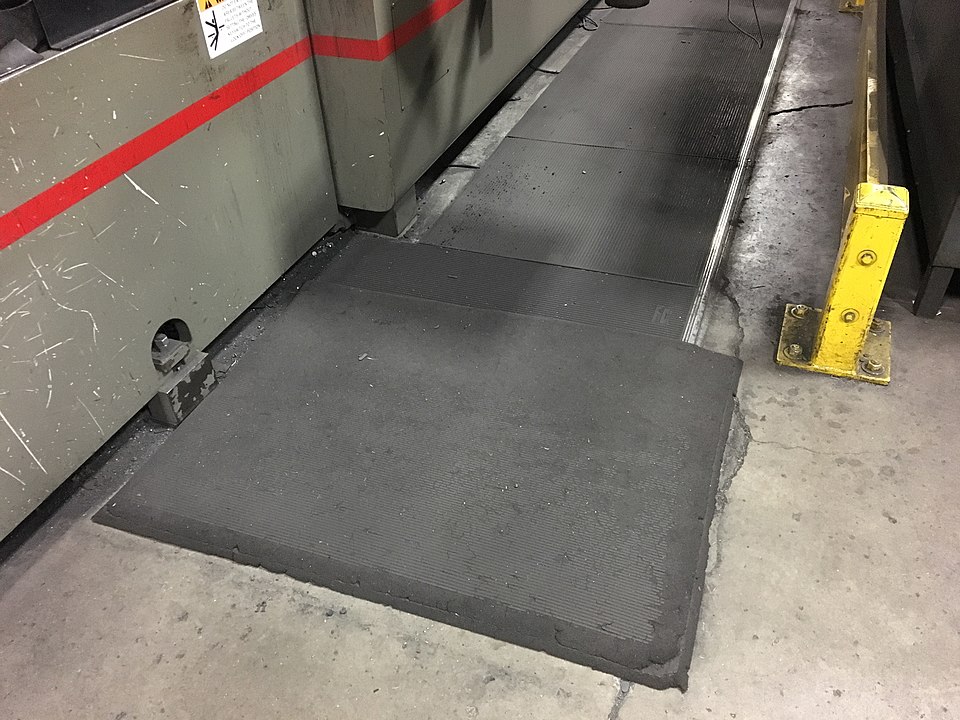
Sometimes, certain parts of a conveyor can’t be protected by perimeter or enclosed guarding. In these situations, pressure mats and light curtains can be acceptable alternatives, provided they keep workers at a safe distance from any moving parts.
When using light curtains, the ISO finger probe can be useful for checking distances.
ROBO FENCE® supplies custom perimeter safety fencing manufactured by our partners at Square Group. We offer an extensive range of panels, gates, and accessories to help guarding function effectively and with minimal disruption to production.
If you’ve already performed a risk assessment and you’re not sure how to start the design process, contact our experts today to schedule a design consultation, and we’ll be in touch within 24 hours.
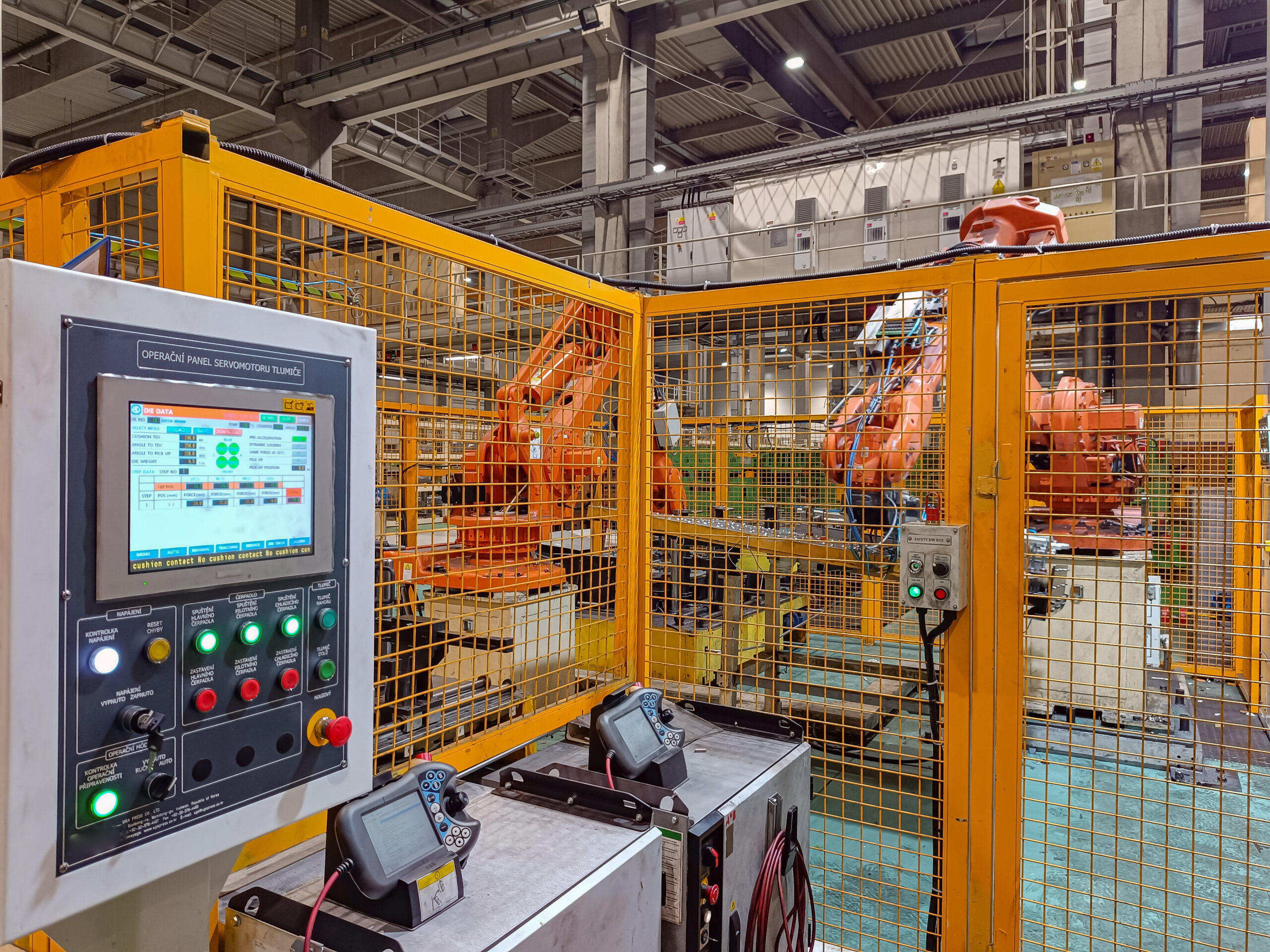
Contact one of our experts to get started on your next machine guarding project. Until then, browse our complete catalog to see our offerings.

Square Group LLC
Proud Manufacturers and Suppliers of ROBO FENCE®